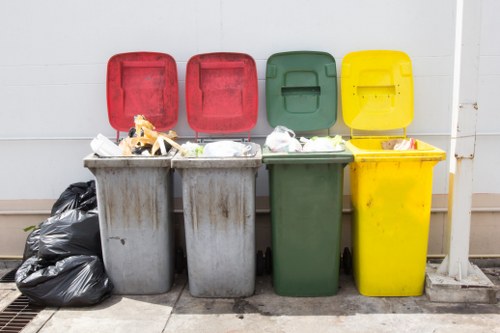
Commercial Waste Stevenage — Health & Safety Policy
Purpose: This policy sets out the approach of our commercial rubbish and waste removal operation to protect employees, contractors and customers. It applies across our service area and to all commercial waste collection activities, including container exchange, bulk rubbish clearance and scheduled skip services. Our commitment is to provide a safe working environment, reduce risk from waste handling, and ensure compliant, responsible rubbish company services for businesses and commercial properties.Scope: The policy covers every aspect of commercial waste management and commercial bin collection in the service area — from manual handling of sacks and sacks of refuse to operating compaction vehicles and arranging hazardous waste transfers. It defines responsibilities, required training and procedures designed to prevent incidents, control occupational health hazards and maintain a safe rubbish collection service. All staff and subcontractors must adhere to the standards described here.
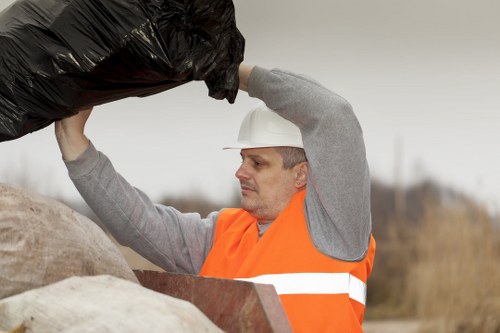
Policy Statement
Our commercial waste collection teams will operate under a framework of continuous improvement to minimise workplace injury, environmental harm and service disruption. We eliminate or reduce hazards by using safe systems of work, appropriate personal protective equipment (PPE), regular maintenance of collection vehicles and containers, and an emphasis on safe rubbish removal planning. This document complements operating procedures and safe working method statements applicable to specific tasks.Responsibilities and Roles
Management holds overall accountability for safety standards, risk assessments and resource allocation for the commercial rubbish service. Supervisors and team leaders are responsible for ensuring staff follow the policy, receive induction and refresher training, and complete pre-shift vehicle and equipment checks. Individual operatives must report hazards, wear specified PPE and follow safe manual handling techniques. Contractors working on behalf of the rubbish company service area must be assessed for competence and must follow our health and safety expectations. Risk assessment and planning are central. Each task — site clearances, bulky waste collection, bin swaps, and hazardous item handling — requires a documented assessment that identifies likely risks, control measures and emergency actions. Assessments must be reviewed after incidents or when work conditions change. Planning includes route risk assessments for delivery and collection vehicles to reduce the chance of collisions, slips, trips and falls, and contact with sharps or biological contaminants.
Training and competence: all operatives receive induction training on safe rubbish collection, lifting techniques, vehicle operation limits, and infectious waste precautions. Periodic competency checks and toolbox talks reinforce safe behaviours. Records of training, licences and medical fitness are maintained and reviewed. We encourage reporting of near-misses to support learning and improvement across our rubbish removal and commercial waste services.
Operational Controls and Safe Systems
Safe systems of work include pre-shift vehicle inspections, correct loading limits for skips and compactors, and designated safe zones for manual loading and customer interactions. The policy promotes mechanised lifting aids where feasible and specifies segregation of hazardous wastes from general commercial rubbish. Maintenance schedules for vehicles and lifting equipment are strictly observed to prevent mechanical failures that could cause injury or service interruption.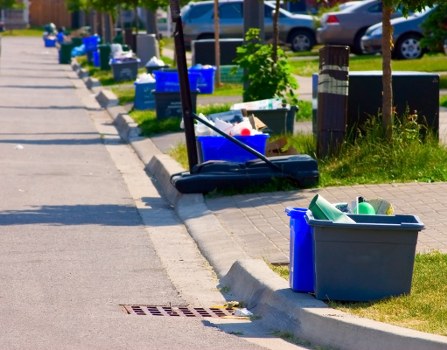 PPE and hygiene: Required protective equipment includes high-visibility clothing, gloves resistant to puncture and contagion, safety boots, and eye protection when necessary. Hand-wash facilities, sanitiser and wound-care kits must be readily available. These measures reduce biological and chemical exposure during rubbish handling and support staff wellbeing during routine and exceptional collections.
Incident Management, Monitoring and Review
All accidents, near-misses and environmental incidents are recorded, investigated and acted upon to prevent recurrence. We monitor safety performance through audits, inspections and key performance indicators specific to commercial waste services. Regular reviews of policy and practice ensure alignment with industry best practice and emerging hazards in waste management. Continuous improvement and transparent reporting support an effective safety culture.Emergency response: procedures are in place for dealing with fires, spillages, sharps discoveries and other on-site emergencies while providing commercial rubbish collections. Staff are trained in basic emergency response, the use of spill kits and evacuation procedures. Cooperation with emergency services is coordinated where incidents escalate beyond on-site control.
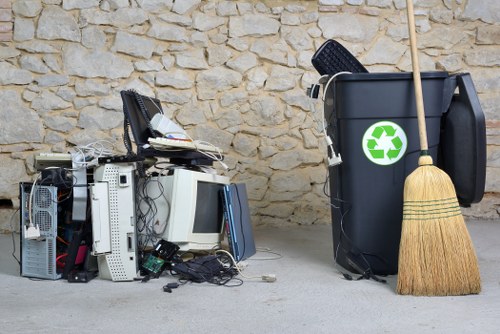
Waste segregation and control of hazardous materials: our operational rules prohibit the acceptance of certain hazardous items at standard commercial collections; items requiring specialised disposal are isolated and managed per hazardous waste protocols. This reduces risks to operatives and downstream sorting facilities and supports responsible environmental stewardship across the service area.
Policy review and employee engagement: this Health & Safety Policy for commercial waste services is reviewed annually or following significant changes. Employees are consulted on safety matters and encouraged to suggest improvements. By embedding safety in every task — from bin collection to commercial rubbish clearance — we maintain reliable services while protecting people and property.
