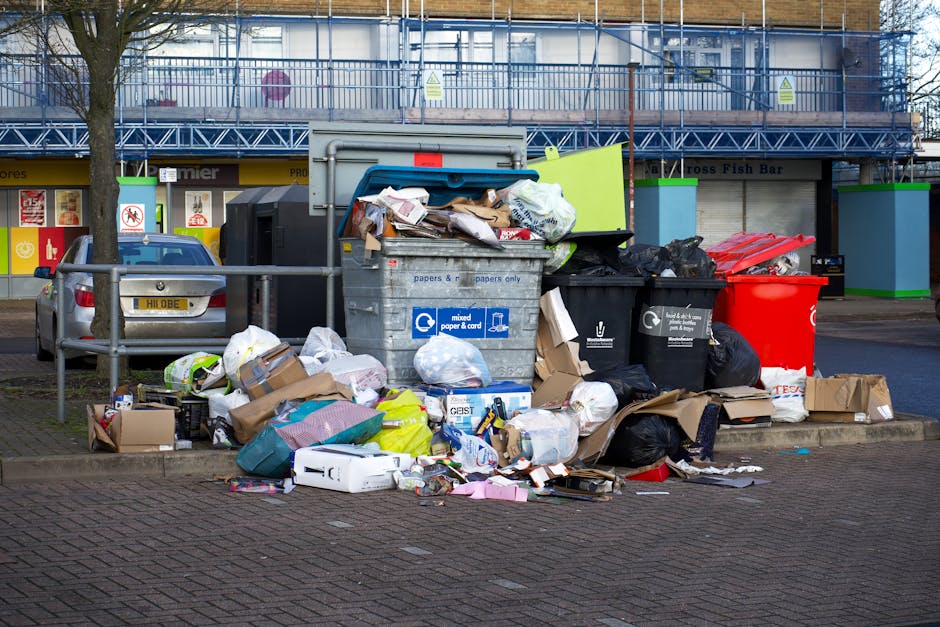
Commercial waste in Stevenage for straightforward business collections
Commercial waste in Stevenage needs a practical service that keeps trading spaces clear, organised and ready for the next working day. We collect a wide range of non-hazardous business waste from shops, offices, workshops, hospitality premises and shared commercial buildings, with an approach that is designed around the type of material, the space available and the volume that has built up. The aim is simple: remove waste responsibly, separate reusable and recyclable materials where possible, and leave the premises ready for normal use.
Our work covers routine collections as well as one-off clearances, so businesses can arrange help for accumulated stock, packaging, furniture, fixtures and mixed general waste. Where items need separating before removal, we can organise the collection in a way that reduces disruption on site. Clear communication matters here, because commercial waste often includes different material streams that should not be handled as if they were all the same.
Start with the kind of waste you need removed, then use the details below to see how the service is usually arranged. If you already know what needs shifting, you can request a quotation once you are ready and provide the basic information needed for an accurate response.
Business waste removal for day-to-day commercial needs
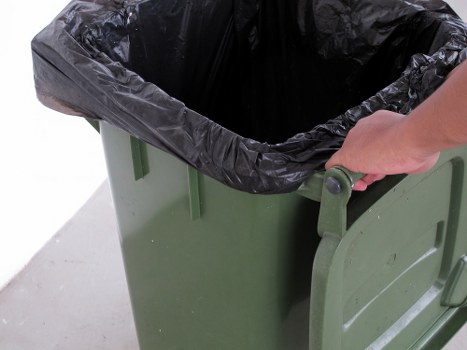
Business waste removal is the most direct option when a premises produces mixed rubbish that needs clearing in a tidy, organised way. This can include bagged refuse, dismantled packaging, office clutter, broken non-electrical items and general junk that should not remain in customer areas or storage rooms. The service is useful for companies that want a reliable clearance rather than an occasional tidy-up, especially where waste builds up faster than in a domestic setting.
We can handle collections from a wide variety of commercial settings, including retail units, small offices, warehouses, trade counters and managed premises. The work is arranged so that access, loading and sorting can be carried out efficiently, with attention to safe handling and sensible separation of materials. If you need a broader sweep of site waste rather than one single item, this is usually the most suitable starting point. Business waste removal gives a useful overview of that service.
For many customers, the main decision is whether the waste is a straightforward mixed load or something that needs more careful categorisation. Items that are clean, dry and recyclable can often be separated from heavier general rubbish, while unsuitable materials may need to be listed separately. If you want a clearer breakdown of your options, our team can talk through the load before collection so the job is planned around the actual contents rather than a guess.
Office clearances and workplace furniture

Offices generate a different type of waste from warehouses or shops, and office clearance usually involves desks, chairs, cabinets, monitors, paperwork, filing units and general workroom clutter. A good clearance service has to respect how offices are used, because access routes, shared entrances and occupied rooms often need more care than an empty storage unit. That is especially true when the work includes removing bulky items from upper floors or through narrow internal corridors.
Where office furniture and equipment are no longer needed, we can organise the removal of desks, seating, storage units and other non-hazardous items that are taking up usable space. In some cases the best approach is to clear out the redundant furniture first and then deal with the remaining waste so the layout can be reset properly. For related items, office clearance explains the scope of the service, while furniture clearance is useful if the main job is bulky furnishings rather than mixed waste.
Useful preparation keeps the clearance smoother. It helps to note which items are to stay, which areas can be accessed, and whether anything is restricted because of building rules or shared use. If paperwork or confidential material is involved, it should be identified in advance rather than mixed into general rubbish. That allows the job to be planned correctly and helps avoid delays on the day.
Bulky item disposal and fit-out waste
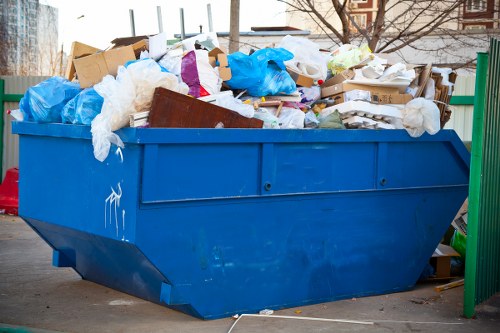
Bulky waste often appears after refits, reorganisations or tenant changes, when old fixtures, broken storage, unwanted furnishings and clearance debris all need to go at once. Commercial premises rarely generate one simple type of waste in these situations, so the service needs to cope with mixed loads while still handling each item responsibly. The key is to move the waste out in a controlled way without leaving the site cluttered or blocking access for staff and visitors.
Items such as sofas, reception furniture, shelving, display units, counters and mixed fixtures may all need separate attention depending on what they are made from and how they have been stored. For single-item or furniture-led removals, mattress and sofa disposal and furniture disposal can be relevant pages, while builders waste clearance may suit jobs that include rubble, offcuts, packaging and renovation debris. Choosing the right service avoids overcomplicating a straightforward load.
When planning this kind of work, it helps to separate reusable furniture from damaged material, and to identify any pieces that may need disassembly before they can be moved. A room-by-room list is not always necessary, but clear information about access, size and quantity makes the quotation more accurate. Keep the message simple and practical: what needs removing, what remains on site, and whether loading restrictions apply.
Commercial clearance by material type
Some businesses produce waste that is better managed by material type rather than by location. For example, mixed household-like items from staff areas, hard office rubbish, garden debris from external premises and appliance waste all require different handling. A good commercial service looks at the contents first, then decides how the load should be collected, sorted and taken away. That reduces the chance of treating everything as one generic skip load when the contents are more varied.
Where the waste includes fridges, freezers or similar appliances, the disposal route is different from ordinary rubbish because the item may contain components that need specialist treatment. The same careful approach applies to other niche waste streams that should not be mixed into general business rubbish. Pages such as fridge and appliance removal and hazardous waste disposal are there for those more specific jobs, while broad commercial waste remains the main service for everyday business clearances.
For customers, the practical decision is usually whether to book one mixed collection or divide the work into separate loads. If the waste is mainly routine commercial rubbish, a single collection is often enough. If the contents include specialist items, it is better to mention them early so the right removal method can be chosen. That keeps the process efficient and helps avoid unnecessary disruption to trading hours.
Pricing factors and quotation details
Commercial waste pricing depends on the contents, the volume, access, labour required and any special handling involved. A small ground-floor clearance with easy loading is different from a larger job on an upper floor, in a shared building or across several work areas. The number of items matters, but so does how quickly they can be gathered and moved. If the waste is mixed, the balance of recyclable and non-recyclable material can also affect how the job is planned.
It is sensible to give a plain description rather than a polished sales summary. List the main item types, mention approximate quantity if known, and note anything awkward such as narrow stairs, loading restrictions or limited parking. If you want to compare a few service routes before confirming, our pricing and quotes page can help with the next step. For a straightforward enquiry, you can also use our contact route to ask for a quotation when you are ready.
Two details are especially useful in commercial work: whether the waste is ready to load, and whether anything needs sorting first. That can include separating furniture from bagged rubbish, identifying confidential material, or pointing out items that should be left behind. Accurate information at the start keeps the quotation grounded in the real job rather than in rough assumptions, which is better for both planning and budgeting.
Waste types that need extra care
Not every business load is suitable for the same collection method. Some items need separate handling because of their contents, composition or disposal route. Even within a commercial setting, the waste stream may include chemicals, damaged electricals, sealed containers or other material that should not be treated as ordinary rubbish. Identifying those items early helps ensure the rest of the collection is arranged around the correct process.
For companies that need to remove paperwork or records securely, the removal of waste is only part of the job, because sensitive documents should be handled in a way that suits the business’s own compliance needs. Likewise, anything that is likely to affect safety, such as fragmented glass, sharp edges or heavy awkward loads, should be listed clearly. If your requirements go beyond normal commercial waste, pages such as confidential shredding and insurance and safety may be relevant to the way you plan the work.
For mixed sites, a short written summary often works better than trying to describe every detail in conversation. A few sentences about what is present, what is not to be touched, and which items need specialist attention can be enough. That lets the collection team keep the waste stream organised and reduces the chance of delays caused by avoidable uncertainty when the job begins.
Recycling, reuse and responsible disposal
Commercial waste should not be viewed only as something to be taken away. Where possible, items can be sorted so that recyclable materials are separated from ordinary rubbish and reusable goods are kept out of the waste stream. This is particularly important in offices, retail spaces and storage areas where cardboard, metal, plastics and furniture may be mixed together in one place. A thoughtful collection avoids wasting useful material.
Recycling and sustainability explains the wider approach to resource handling, but the basic principle is the same on every collection: remove what no longer serves the business, and do so with proper attention to disposal routes. Depending on the load, some items may be suitable for diversion from landfill, while others may need specific treatment because of their construction or contents. The service is built around that practical sorting stage rather than a one-size-fits-all load.
Businesses sometimes underestimate how much recyclable material hides inside an apparently mixed clearance. Cardboard from deliveries, metal shelving, wood offcuts and plastics from packaging can all be present in one job. When those materials are identified early, the collection can be planned more sensibly and the disposal route can be chosen with more care. That makes the process more orderly and keeps the focus on actual contents rather than assumptions.
How to prepare a commercial collection
A tidy preparation usually leads to a more efficient collection, but it does not need to be complicated. The best starting point is to identify what stays on site and what should be removed, then make sure any access details are clear. If items are in a rear store, upstairs room or shared loading area, that should be mentioned before the visit rather than discovered later. Clear notes help the collection go more smoothly.
It is also helpful to group similar materials where possible. General rubbish, furniture, cardboard and special items are easier to assess when they are not scattered through several rooms. If there are any site rules, security steps or narrow entry points, mention them so the removal can be arranged with those limits in mind. For customers who prefer to manage the process digitally, book online offers a simple route to start the enquiry, while a direct call for a quotation remains perfectly fine.
- State the main waste types, not just the room they came from.
- Note whether access is level, upstairs or through shared areas.
- Separate anything specialist, confidential or fragile from ordinary rubbish.
- Confirm which items are staying so they are not collected by mistake.
About Stevenage
Stevenage is a Hertfordshire town best known for its post-war New Town expansion, although its history reaches back far earlier than that modern layout. The older core includes the High Street and historic buildings such as St Nicholas Church, while the wider town grew rapidly after the New Town designation in 1946. That planned expansion brought a distinctive structure of neighbourhoods, roads and public spaces, giving Stevenage a reputation for being one of the earliest and most recognisable New Towns in England. The town sits in North Hertfordshire, close to the A1(M), with rail connections that have long made it an important commuter and employment base. Public green spaces play a major role in the local landscape, including Fairlands Valley Park, which offers lakes, open water features and walking routes in a setting that contrasts with the more urban parts of the town. Stevenage also has a strong sporting presence through Stevenage Football Club and a cultural life that includes theatres, leisure facilities and community venues serving the surrounding districts. Its architecture reflects that mix of periods: medieval remains in the old settlement, mid-20th-century housing and commercial development, and newer retail and business areas that continue to shape the town centre. Taken together, these elements make Stevenage a place where historic continuity and planned modern growth sit side by side rather than in conflict.
Commercial collections arranged around the job
Commercial waste work is often at its best when the collection is planned around the actual shape of the premises rather than forced into a generic routine. A shop closing for refurbishment, a warehouse clearing out old racking, and an office removing redundant furniture all present different handling needs. The right collection takes account of lifting, sorting, loading and disposal without making the customer fit the waste into a narrow process that does not suit the site.
Useful supporting pages are available when a job needs a narrower focus. garage clearance and loft clearance can suit mixed storage areas, while home clearance and house clearance are there where the work is domestic rather than commercial. For premises with outside areas, garden clearance may be relevant if the site includes overgrown or cluttered external space that needs to be brought back under control.
When you decide what to remove, it helps to think in terms of categories rather than single objects. That means grouping the contents into furniture, bagged waste, recyclables, appliances and anything specialist. From there, the quotation request becomes clearer and the collection itself is easier to manage. If you are ready to move on, ask for a quotation and share the basic details of the load.
Choosing the right route for your waste
There are times when commercial waste is best handled alongside another related service, rather than treated as a single catch-all job. A business moving out of a unit may need clearance of furniture, packaging, loose rubbish and leftover stock in one visit, while a renovation may produce builders waste alongside fixtures that no longer fit the new layout. In those cases, the right route depends on what is actually in the premises and how mixed the contents are.
Waste removal offers the broadest overview of the service family, and builders waste clearance is suitable where debris from works is the main issue. If you are dealing with a specific item type, such as a fridge, a mattress or a sofa, a more focused route may be simpler. That is why it helps to describe the contents carefully before booking, so the collection matches the job instead of making the job fit the collection.
The final step is straightforward: decide which waste is staying, which is going, and whether any items need careful handling before removal. Then send through the facts needed for the quotation. If you would like to move ahead now, request a quotation and give a brief description of the waste, the access and the preferred timing.